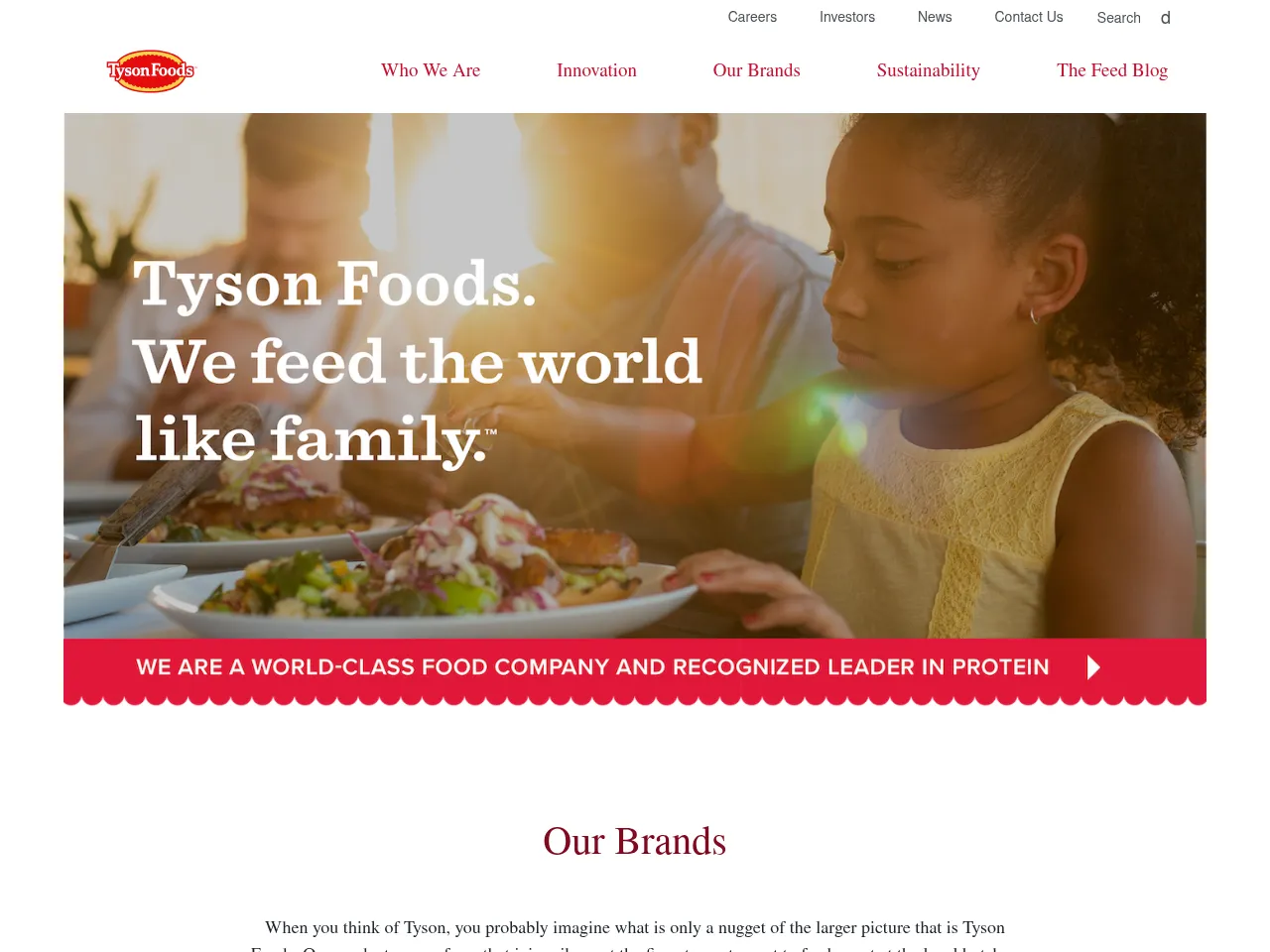
Tyson Foods is the world's second-largest processor and marketer of chicken, beef, and pork, founded in 1935 by John W. Tyson during the Great Depression in Springdale, Arkansas, where it remains headquartered. What began as a small poultry business has grown into one of the largest food companies in the world, generating over $50 billion in annual revenue. Tyson's brand portfolio includes Tyson, Jimmy Dean, Hillshire Farm, Ball Park, Wright Brand, Aidells, and State Fair. The company processes approximately one-fifth of all beef, pork, and chicken produced in the United States, making it a critical player in the American food supply chain. Tyson employs over 120,000 people and operates more than 200 production facilities and offices globally. The company has expanded into prepared foods and international markets while also investing in alternative protein ventures. Tyson Foods is publicly traded on the NYSE and is a component of the S&P 500 index. The Tyson family maintains significant control through its Class B stock ownership.
Food & Beverage Brands
Tyson Foods is the world's second-largest meat processor, producing chicken, beef, and pork products under brands including Tyson, Jimmy Dean, Hillshire Farm, and Ball Park.
Brand Details
IndustryMeat & Poultry Processing
Founded1935
HeadquartersSpringdale, Arkansas, USA
3.3
1 reviews
Product Consistency
3.8
Value for Money
3.8
Packaging Design
3.3
Brand Innovation
2.8
Taste Quality
2.8
Ingredient Quality
2.5
Claude Opus 4.6
AI Review
3.3/5
Tyson Foods is an undeniable powerhouse in American food production, processing roughly one-fifth of all meat in the country. The sheer scale of operations provides reliable availability and competitive pricing that consumers depend on. The brand portfolio, spanning Jimmy Dean, Hillshire Farm, and Ball Park, covers a wide range of everyday protein needs competently. However, the company has faced persistent criticism over labor practices, environmental impact, and animal welfare standards that weigh on its reputation among increasingly conscious consumers. Product quality is functional rather than exceptional, designed for mass-market efficiency over culinary distinction. The alternative protein investments show awareness of market shifts but have not yet produced standout results. Tyson delivers on its core promise of affordable, accessible protein at scale, but the brand carries reputational baggage that more sustainability-focused competitors are exploiting.