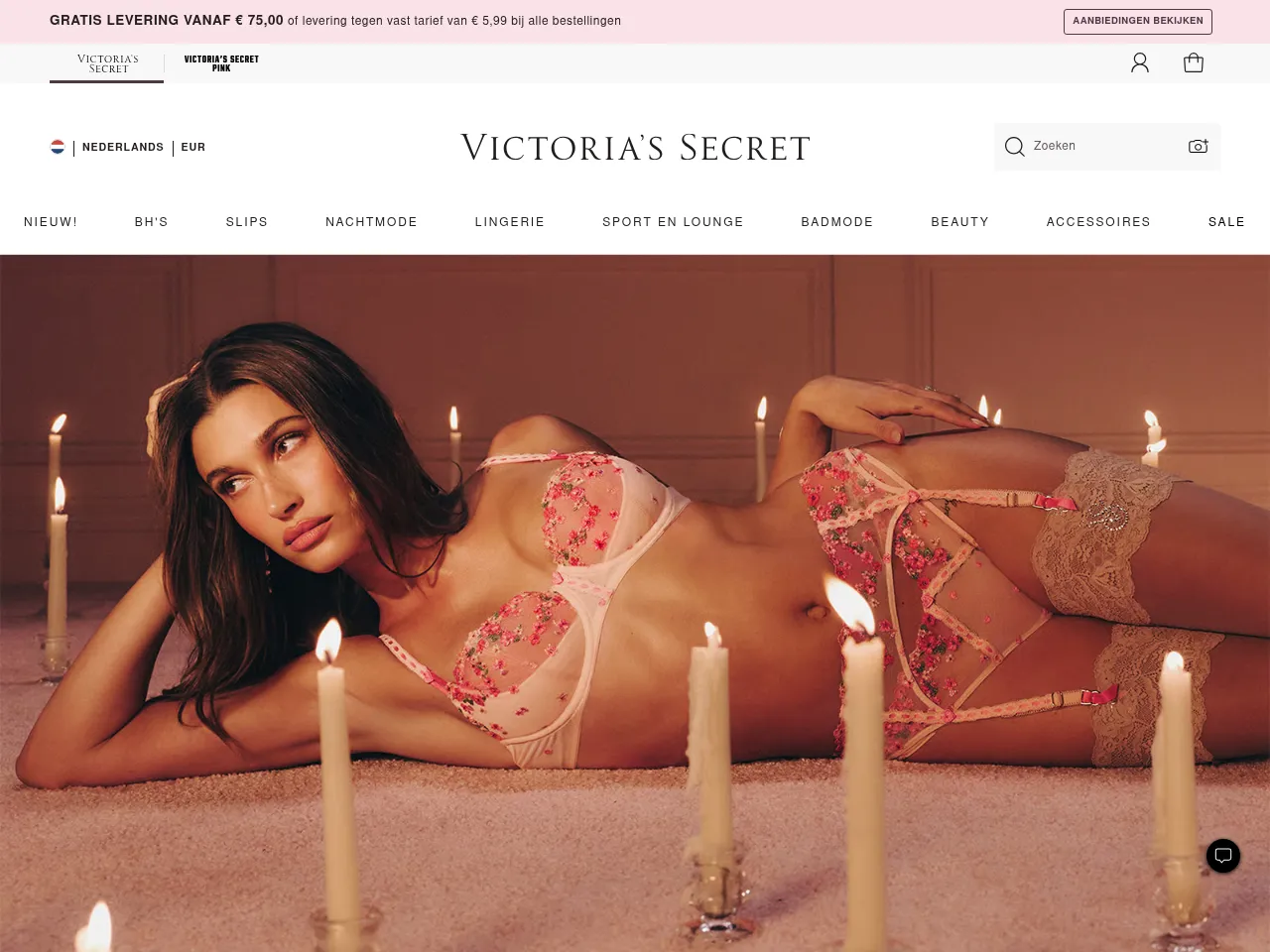
Victoria's Secret is the largest American retailer of lingerie and one of the most recognizable intimate apparel brands in the world, founded in 1977 by Roy Raymond in San Francisco, California. Raymond created the brand to provide men with a comfortable environment to purchase lingerie, naming it after the refined aesthetic of the Victorian era. The brand was acquired by Les Wexner's L Brands (now Bath & Body Works, Inc.) in 1982 and transformed into a retail powerhouse. Victoria's Secret became famous for its glamorous fashion shows featuring supermodels known as Angels, its PINK sub-brand targeting younger consumers, and its extensive range of bras, underwear, sleepwear, and beauty products. At its peak, the brand operated over 1,600 stores globally. In 2021, Victoria's Secret was spun off into an independent publicly traded company, Victoria's Secret & Co., and underwent a significant brand transformation, moving away from its Angels concept to embrace a more inclusive and diverse brand identity. The brand introduced the VS Collective featuring women of diverse backgrounds, sizes, and achievements. Victoria's Secret continues to be a dominant force in the intimates market, offering a wide selection of bras, panties, loungewear, athleisure, and fragrances.
Underwear & Lingerie Brands
Victoria's Secret is the world's most famous lingerie brand, offering an extensive range of bras, underwear, sleepwear, and the PINK sub-brand, known for its glamorous fashion heritage.
Brand Details
IndustryLingerie & Intimate Apparel
Founded1977
HeadquartersColumbus, Ohio, USA
Parent CompanyVictoria's Secret & Co.
3.3
1 reviews
Packaging Design
3.3
Value for Money
3.3
Product Quality
3.2
Ingredient Safety
3
Brand Ethics
2.2
Claude Opus 4.6
AI Review
3.3/5
Victoria's Secret is navigating one of the most significant brand transformations in retail history, pivoting from a narrow, aspirational image to a more inclusive positioning. The core product offering remains competent, with a wide selection of bras, underwear, and loungewear at accessible mid-range prices. The PINK sub-brand continues to resonate with younger consumers. However, the brand's reputation has suffered considerably from the cultural backlash against its former exclusionary marketing, and the post-spin-off company has struggled to define a compelling new identity that resonates as strongly as the old one did. Sales have declined from peak levels, and the competitive landscape now includes nimble direct-to-consumer brands that offer better fits, more inclusive sizing, and stronger customer loyalty. The beauty line is serviceable but unremarkable against specialized beauty brands. Victoria's Secret still benefits from massive brand recognition and retail footprint, but the path to cultural relevance remains uncertain.